
Published
Quick answer: Baby Daybook's free tier is capable for simple solo logging on one device. Family sync, real-time caregiver updates, and personalised sleep predictions require a recurring Premium subscription and account registration. Huckleberry is the stronger dedicated sleep-coaching app. If partner sync is what triggers the upgrade, Pebbi includes it free for two carers with no account.
- Baby Daybook Free: capable solo logging on one device, with Premium upsell banners.
- Huckleberry: paid sleep predictions and analytics, best when sleep is the focus.
- Baby Daybook Premium adds account-based family sync and sleep predictions; Pebbi includes two-carer sync free.
Key takeaways
- Baby Daybook's free tier is a capable choice for simple solo logging, but family sync and personalised sleep predictions require Premium and an account.
- Huckleberry is also subscription-led, with a stronger focus on dedicated sleep coaching and deeper sleep analysis.
- If sharing with a partner is the feature that pushes you towards paying, Pebbi includes real-time sync for two carers free with no account.
The short version
Baby Daybook is easy to start with when you want to log feeds, naps, and nappies on one device without immediately paying. The free tier handles that job well. It also displays Premium upsell banners, and the features that turn it into a shared or predictive tool sit behind a recurring monthly or annual subscription.
Huckleberry begins from a similar subscription destination but specialises more deeply in sleep. Give it enough consistent data and SweetSpot starts predicting nap timing. The useful distinction is not "free logbook versus paid analyst"; it is "capable free solo tracking that becomes paid when your needs grow versus a paid sleep specialist."
Baby Daybook: what you get for nothing
Baby Daybook Free covers the everyday solo-tracking basics: feeds, sleep, nappies, and other routine events on one device. You can use those core logs without subscribing, which makes it a practical way to test whether tracking helps before committing money or creating the account needed for its connected features.
The free experience is not entirely promotion-free. It includes banners encouraging an upgrade to Premium. Premium is sold as a recurring monthly or annual subscription and adds family sync with real-time updates for a partner, grandparent, or nanny, plus personalised sleep predictions. Data sync and caregiver sharing require account registration.
Huckleberry: what the subscription buys
Huckleberry inverts the model. The free tier is thin on purpose, and the value is in the paid SweetSpot engine, which reads your logged sleep and suggests when your baby is likely ready to go down next. Plus costs $11.99 a month or $68.88 a year; Premium ($14.99 a month, $119.88 a year) adds human sleep consultations. If wake windows and overtiredness are the puzzle you are stuck on, that interpretation is the point of paying. The pricing breakdown covers exactly what each tier includes.
The one question that settles most of it
Is sleep the specific thing you are trying to fix?
If yes, and you want the deeper dedicated sleep product, Huckleberry is the stronger pick. Baby Daybook Premium also offers personalised sleep predictions, but sleep coaching is Huckleberry's central proposition. If you only want a straightforward record on one device, Daybook Free may be enough and either subscription could be unnecessary.
Almost everything else, breadth of tracking, interface polish, follows from that one answer.
Where Baby Daybook stops being enough
Here is the moment the pricing decision changes. Daybook Free is working well on one phone, then a partner starts the night shift, a grandparent covers Thursdays, or a nanny needs live context. Baby Daybook can support that: Premium family sync shares activity logs with real-time updates across caregivers.
The catch is not that sync is missing. It is that the moment care becomes shared, you need both a recurring Premium subscription and account registration. The same applies when you want personalised sleep predictions. That is a reasonable upgrade if you prefer Daybook's interface and want both features, but it is also the point where comparing the wider market becomes worthwhile.
Side by side
| Baby Daybook | Huckleberry | |
|---|---|---|
| Best for | Free, simple solo logging | Sleep prediction and coaching |
| Cost | Free solo tier; Premium monthly or annual subscription | Free tier limited; Plus $11.99/mo or $68.88/yr |
| Account required | Not for basic solo use; required for sync and caregiver sharing | Yes |
| Sleep prediction | Yes (personalised predictions, Premium) | Yes (SweetSpot, paid) |
| Live multi-device sync | Yes (family sync, Premium) | Yes (paid, needs connection) |
| Offline | Yes | No |
| Privacy posture | No account for basic solo use; account required for sync | Email account required |
Verified July 2026 from public app store listings. Check current terms before installing.
The gap between them, and who fills it
Line the two up and a space opens in the middle: an app that includes live partner sync without making that the point where you start a recurring subscription or register an account.
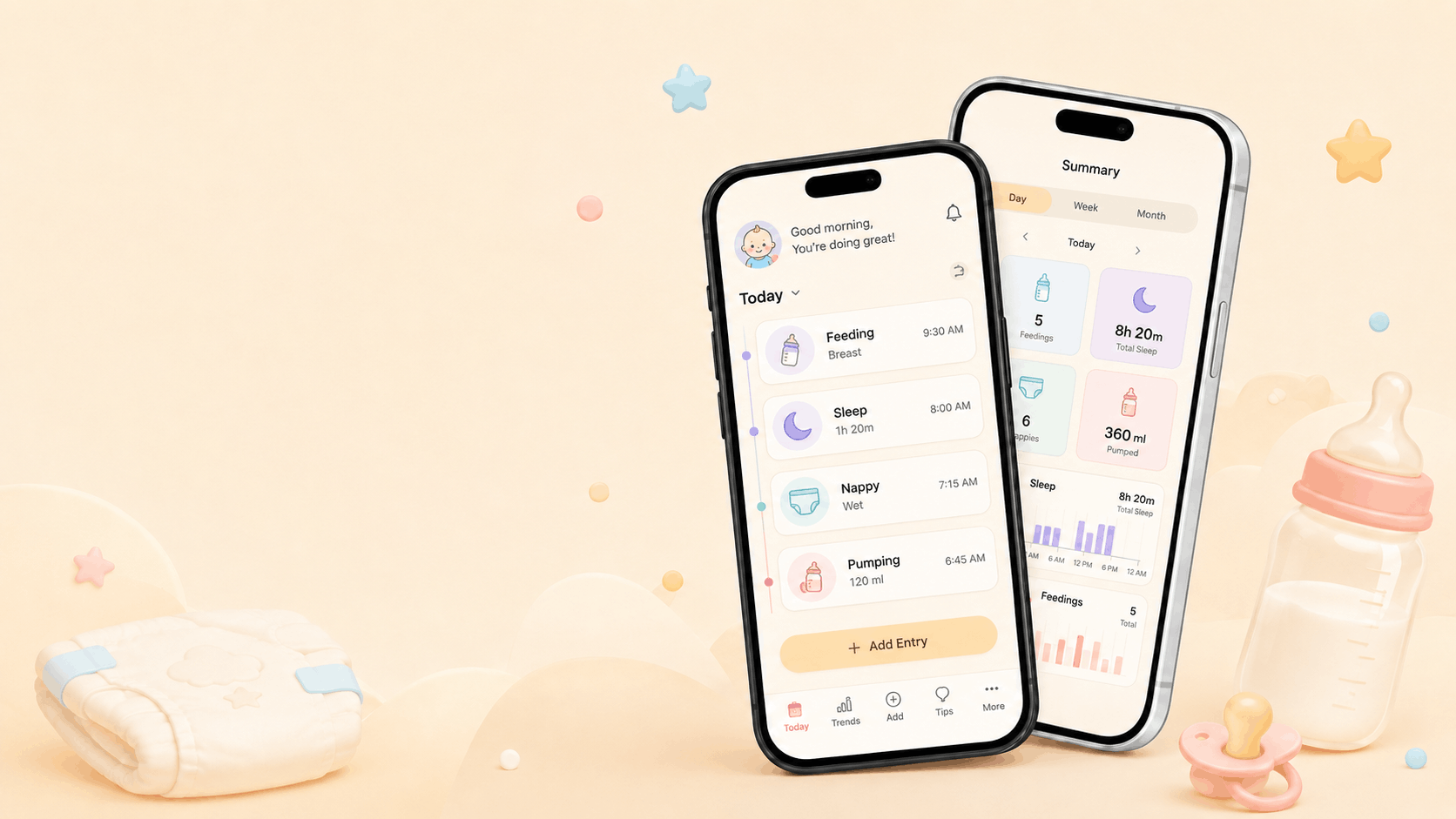
That space is where Pebbi sits, and since we make it, treat this as a disclosed recommendation rather than a neutral one. Pebbi includes two carers synced in real time for free, with the second person joining by QR code and neither person creating an account. What it does not try to be is Huckleberry. There is no deep sleep-science engine; predictions are pattern-based and sit in the optional Premium tier.
So the honest map: pick Baby Daybook Free for capable solo logging, Baby Daybook Premium if you like its interface and want account-based family sync plus predictions, Huckleberry if deeper sleep coaching is the priority, and Pebbi if the real need is two people sharing one clear picture without paying or registering. For another comparison of simple logging versus sleep analysis, read Nara Baby vs Huckleberry. If none describes a problem you have, our do I need a baby tracker guide makes the case for skipping all three.
If you only do one thing
Decide which feature changes the decision. Basic solo logging: Baby Daybook Free. Paid sleep guidance: compare Daybook Premium with Huckleberry. Partner sync: compare Daybook Premium's account-based family sharing with Pebbi, which includes two-carer sync free with no account, on iOS or Android.
For the full field, see the best baby tracker apps of 2026; for the privacy angle specifically, our private baby tracker guide.