
Published
Quick answer: For each pumping session, log: time, duration, output per side, and where the milk went (fridge, freezer, or fed directly). Over time, this data shows your supply trend and lets you calculate your freezer stash. Here is how to do it in Pebbi.
- Track output per side to spot imbalances early. Most parents have a stronger producing side.
- Logging bottle feeds from expressed milk closes the loop between what you pumped and what was actually consumed.
- Pebbi works offline, which matters when pumping at work, in a hospital, or anywhere with poor signal.
Key takeaways
- Consistent session logging is the foundation of freezer stash tracking. If you do not log what you pumped, you cannot calculate what you have.
- The most useful metric is total daily output tracked over time, not any single session.
- Sharing your pump log with your partner or nanny means bottle feeds from expressed milk stay on the same timeline as everything else.
The Data That Actually Matters When You Are Exclusively Pumping
| What to Track | Why It Matters | How Often |
|---|---|---|
| Session time | Identifies your natural supply peaks (most parents pump more at certain times of day) | Every session |
| Output per side | Spots imbalances early, which can indicate positioning or supply issues | Every session |
| Total daily output | Tracks your supply trend over days and weeks | Daily summary |
| Freezer vs fridge storage | Calculates your available stash | Each time you store |
| Feeds from expressed milk | Reconciles output against what was actually consumed | Each bottle feed |
You do not need to track all of these from day one. Start with session time and output, then add storage and bottle feed logging once that feels automatic.
Estimating Your Freezer Stash
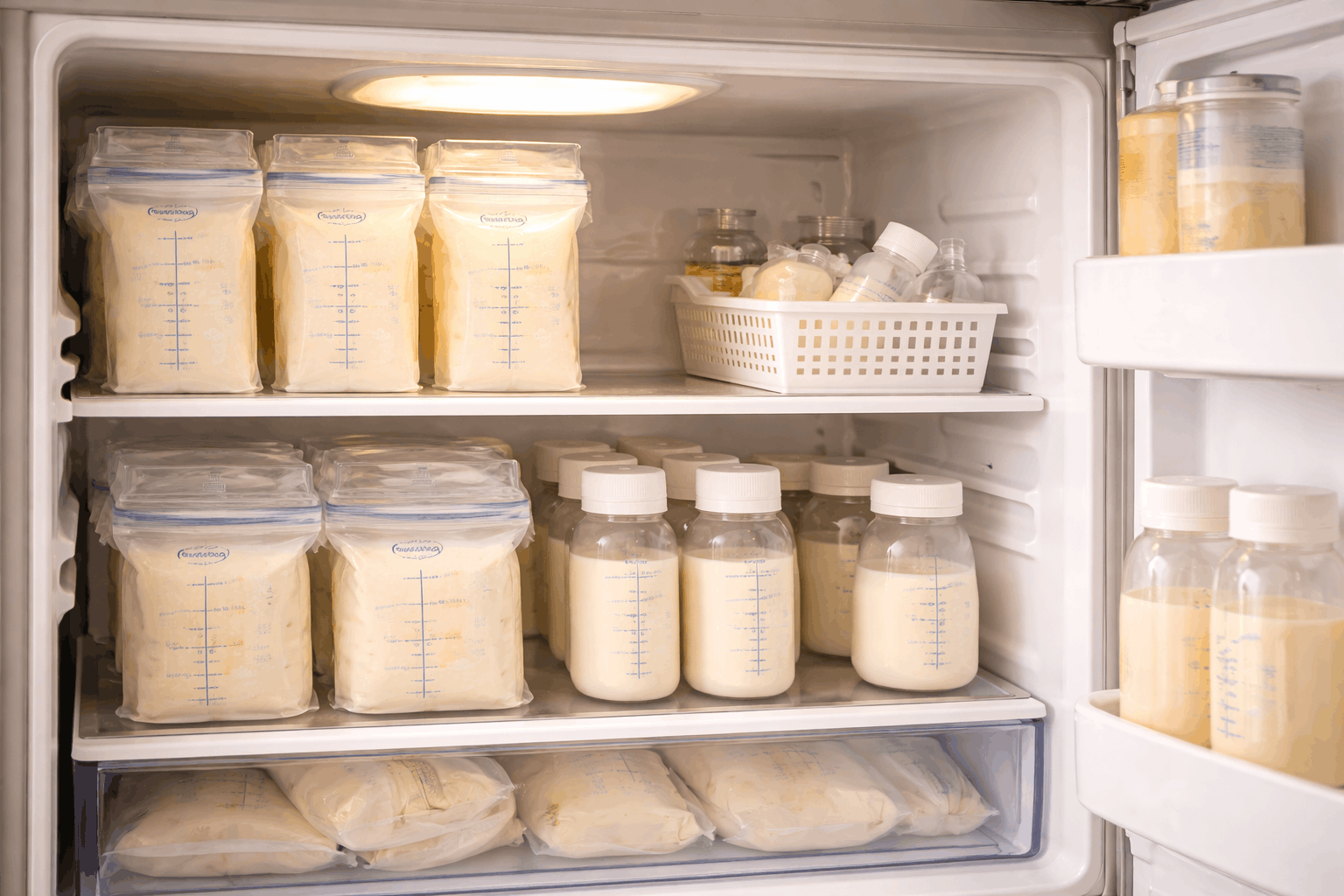
The calculation is straightforward: total volume stored minus total volume fed from storage equals what is currently in the freezer.
In practice, a simple example: you pumped 35oz on Monday, 33oz on Tuesday, and 36oz on Wednesday. Your baby was fed 24oz, 24oz, and 25oz from the expressed milk across those three days. Total pumped: 104oz. Total consumed: 73oz. Remaining (across fridge, freezer, and any bag in use): approximately 31oz, minus any waste from leftover bottles.
The reason this is hard to track without logging is that production and consumption happen at different times. You pump at 6am, the milk goes to the fridge, the nanny feeds 4oz from that batch at 11am, you pump again at 10am, some of that goes to the freezer, some to today's afternoon bottle. Without a log, you are guessing your stash. With one, you have a running total.
Pebbi logs both pumping output and bottle feeds, so both sides of the calculation are captured in the same timeline. You see total output and total consumed from expressed milk in one place. The maths becomes easy.
Log every session, track your stash, share with your partner or nanny. Pebbi is free and works offline too. Download for iOS or Android.
Logging Sessions One-Handed
Exclusive pumping means your hands are occupied during every session. The practical requirement is that logging needs to work with one thumb, quickly, before you forget the numbers.
Pebbi's logging flow is built for speed. You tap to start a session and tap to end it. Duration is recorded automatically. Output can be entered as a total or per side. The entry is saved without navigating through multiple screens.
Offline capability matters specifically for exclusive pumping parents. Hospital pumping rooms, workplace lactation spaces, cars, and anywhere with unreliable signal are all common pumping locations. Logging without internet means you do not lose the session data if you are somewhere without WiFi. Everything syncs automatically when you reconnect.
Sharing Your Pump Log with Your Partner or Nanny
When a partner or nanny is feeding the baby from your expressed milk stash, they need to log the bottle feed in the shared timeline. This closes the loop between what you produced and what was consumed.
Without a shared log, you might pump at 6am, go to work, and have no idea how much the nanny fed during the day. You come home with no way to know whether the fridge supply was enough, whether anything needed to come from the freezer, or whether tomorrow you need to pump more. With a shared log, the nanny logs each bottle feed during the day and you can see the consumption in real time.
The setup is simple: the nanny is added to Pebbi via QR code (no account needed for them), they log bottle feeds during their shift, and you see the full picture across production and consumption in one timeline. See our nanny handover guide for the full nanny setup process, or the partner sharing guide if you are sharing with a partner instead.
For a broader overview of apps suitable for various tracking needs, see our best baby tracker apps comparison.