
Published
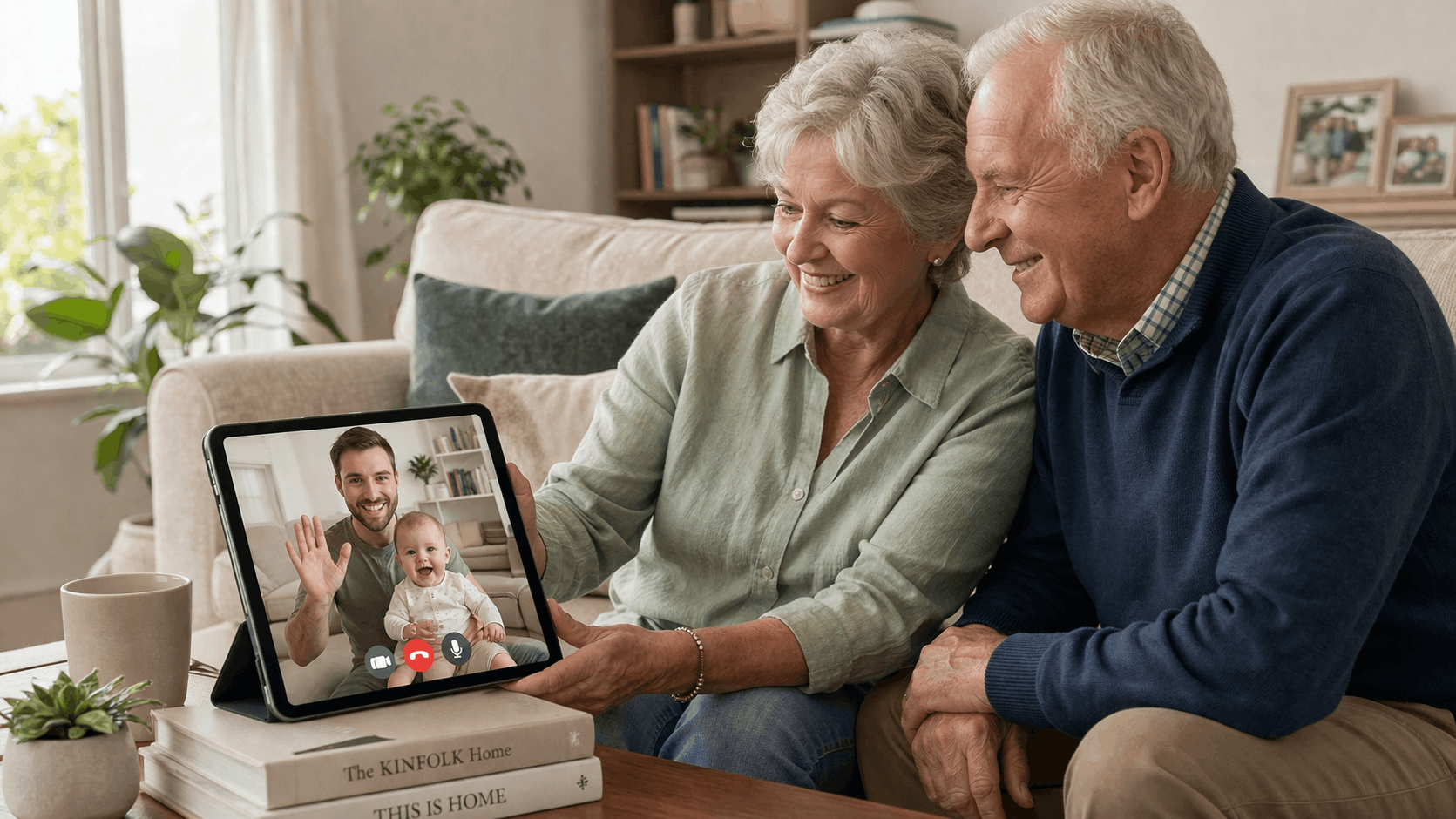
Quick answer: A shared baby log lets grandparents see feeds, naps, and nappy changes as they happen, without you texting every update or managing the family WhatsApp thread.
- Grandparents and in-laws want to feel connected. Parents want to stop being the information relay. A shared log gives both sides what they need.
- The daily 'How's the baby?' call is often about reassurance, not data. A shared log handles the facts so the call can be about connection.
- Pebbi lets grandparents see the timeline with no account: QR code setup in under a minute.
Key takeaways
- The constant "How's the baby doing?" messages from grandparents come from love, not nosiness. But answering them repeatedly adds to the mental load of new parenthood.
- A shared baby log gives grandparents the information they want (feeds, naps, how the day is going) without requiring you to compose updates or answer the same questions every evening.
- When grandparents also provide hands-on care, a shared log becomes a coordination tool that prevents mistakes, especially around medication and feeding schedules.
The Grandparent Information Problem
The situation looks different in every family. For some it is grandma on WhatsApp asking for photos. For others it is a grandparent who calls every evening. For others again it is your in-laws on separate threads, each wanting a slightly different style of update. Across all of it, the pattern is the same: family love the baby and want to stay close, and you end up as the relay between them and what actually happened today.
If a nanny or childminder has your baby instead, the same urge to check in often appears. A shared baby timeline replaces that back-and-forth for whoever is caring for your child.
Your mum calls at 5pm: "How's the baby? Did she eat well today? How was the nap? Is she sleeping better at night?"
Your mother-in-law texts at 7pm: "Just checking in! How's our little one? Send photos!"
Your dad sends a WhatsApp that is somehow both a question and a statement: "Hope she's eating. Your sister was a terrible eater at that age."
Maybe it is both sides of the family on different threads, each expecting a slightly different tone of update.
None of this is malicious. It comes from genuine love, genuine interest, and the entirely understandable desire to stay connected to a grandchild they adore. The problem is not the grandparents. The problem is that you are the information bottleneck, and managing that flow takes energy you do not have.
Every update you send is a small task. Composing a text, choosing a photo, remembering what happened today in enough detail to satisfy the question, doing it for both sets of grandparents, doing it every day. Individually, each message is trivial. Collectively, it is another item on an already overwhelming list of things that somehow fall to you.
Why "Just Send a Quick Text" Is Not Quick
From the grandparent's perspective, they are asking one simple question. From the parent's perspective, it is one of dozens of demands on their attention in a day that already has no margin.
The maths is straightforward. Two sets of grandparents, each wanting a daily update, is at minimum four exchanges per day (question, answer, follow-up, response). If each exchange takes three minutes including the context switch from whatever you were doing, that is twelve minutes a day spent on grandparent updates. In a week, that is nearly an hour and a half. Over a month, six hours.
Six hours is not nothing when you are sleeping in three-hour blocks, trying to shower before noon, and wondering whether you remembered to eat lunch.
And that is the baseline. It does not account for the group chat that spirals into unsolicited advice, the photo requests when you have not brushed your hair in two days, or the phone call that arrives at the exact moment you have finally got the baby to sleep.
What Grandparents Actually Want
Strip away the specific questions and grandparents usually want two things:
Connection. They want to feel involved in their grandchild's life, especially in the early months when everything is changing fast. This is emotional, not informational. They do not really need to know that the feed was 140ml. They need to feel like they are part of the story.
Reassurance. Is the baby healthy? Is the baby eating? Is the baby growing? Are you coping? These are the questions underneath the questions. A simple "she's fine" is often all they need, but when they do not hear it, the worry fills the gap.
A shared baby log addresses the information side of both needs. Grandparents can see the day unfolding: feeds logged, naps recorded, a note about a new food tried. It gives them a sense of involvement that does not depend on you narrating every detail.
The connection side (the emotional relationship, the stories, the laughter) is better served by actual conversation. And here is the interesting thing: when the information exchange is handled by a shared log, the phone calls and visits become warmer. Instead of spending ten minutes answering "Did she eat? How's her sleep? Any teeth yet?", you can spend that time actually talking. The log handles the data. The relationship gets the good bits.
Shared Log vs Daily Update: What Changes
| Daily messages/calls | Shared baby log | |
|---|---|---|
| When grandparents get information | When you find time to reply | Whenever they choose to look |
| Your effort | Compose and send updates daily | None: the log updates as you track |
| Information quality | Depends on your memory and energy | Real-time, accurate timeline |
| Grandparent satisfaction | Variable (often want more detail) | High (they can see everything themselves) |
| Guilt when you forget to update | Significant | None: the log is always there |
| Phone calls | Often spent on logistics questions | Free for actual conversation |
The shift is subtle but meaningful. You are not ignoring your parents or shutting them out. You are giving them better access to information through a channel that does not require you to be the middleman.
What Does This Look Like in Practice?
Here is a typical day with the message-based approach:
- 10:00am: Mum texts: "How's the baby this morning?"
- 10:15am: You reply (mid-feed, one-handed): "Fine, just having a bottle"
- 12:30pm: Mother-in-law texts: "Did she nap?"
- 12:45pm: You reply: "Yes about 40 mins, just woke up"
- 3:00pm: Mum texts: "Send a photo when you can!"
- 5:15pm: Dad calls: "How was her day?"
- 5:20pm: You summarise the day while also making dinner and holding the baby
Six interactions. Each small. Collectively exhausting.
Here is the same day with a shared log:
- 8:15am: You log breakfast as you normally would
- 10:00am: You log a bottle
- 10:30am: You log nap started
- 11:10am: You log nap ended
- 12:30pm: You log lunch
Grandparents check the log whenever they want. Your mum looks at 10am and sees the bottle entry. Your mother-in-law checks at noon and sees the nap. Your dad glances at it after work. All informed, no messages required from you.
When your mum calls at 5pm, she already knows the baby ate well and had a decent nap. The conversation starts with "I saw she tried avocado, did she like it?" instead of "Did she eat today?" That is a better conversation for everyone.
When Grandparents Also Provide Care
The dynamic shifts again when grandparents are not just observers but active caregivers. If Grandma watches the baby every Thursday, or Grandpa does the morning shift on weekends, the shared log becomes a coordination tool, not just an information feed.
The handover problem. When you drop the baby with a grandparent, they need to know: when was the last feed, when was the last nap, is there medication due, anything unusual to watch for. Trying to convey this verbally at the door while also wrestling with a car seat and saying goodbye is how things get missed.
With a shared log, the handover information is already there. The grandparent opens the app and sees the morning's timeline. No verbal checklist needed. No "I forgot to mention..." text ten minutes later.
The logging problem. Can you realistically expect a grandparent to log feeds and naps? This depends entirely on the tool. If logging requires navigating a complex app with fourteen categories and mandatory fields, the answer is no. If logging requires tapping "bottle" and moving on, the answer is usually yes.
The key is choosing a tool simple enough that the least tech-confident member of your care network can use it without frustration. If a grandparent can use WhatsApp, they can tap a button that says "feed." The interface just needs to be that obvious.
The medication safety issue. This is where shared logging between parents and grandparents goes from convenient to genuinely important. If the baby is on infant paracetamol, reflux medication, or antibiotics, the grandparent administering a dose needs to know when the last dose was given. Doubling up on infant medication is a real risk when care is split between homes, and a shared log with clear medication entries eliminates the guesswork.
The Technology Barrier (and How to Clear It)
The most common objection to using a shared baby log with grandparents is: "My parents can barely use their phone." This is sometimes true and sometimes a convenient excuse. Most grandparents who can manage Facebook, WhatsApp, and FaceTime can manage a baby tracking app, if the app is simple enough.
The real barriers are usually:
Account creation. If the app requires a grandparent to create an account with an email address, choose a password, verify the email, and navigate an onboarding flow, many will give up. Account creation is the number one point of abandonment for less tech-confident users.
Too many features. If the first screen after opening the app shows twelve tracking categories, a dashboard, and three tabs, it is overwhelming. The grandparent does not need to understand the whole app. They need to see the timeline and tap "feed" when they give a bottle.
Confusing setup. If connecting to the parent's baby profile requires navigating settings menus, entering codes, and troubleshooting sync, the parent will end up doing it remotely over a phone call, which is its own form of stress.
The solution is an app where setup takes under a minute (ideally a QR code scan or simple invite code) and where the interface is immediately usable without explanation. If you need to write instructions, the tool is too complex for this use case.
The Boundaries Conversation
Sharing a baby log with grandparents does raise a question worth thinking about: how much visibility do you want to give them?
Some parents are completely comfortable with grandparents seeing the full timeline. Others worry about unsolicited advice: "She only napped for 30 minutes? Have you tried putting her down earlier?" or "Three feeds by 10am seems like a lot. Is she getting enough at each one?"
This is a personal decision, and there is no right answer. A few things to consider:
Most grandparents are not looking to critique. They are looking for connection and reassurance. Seeing that the baby had a normal day of feeds and naps is comforting to them, even if the specifics are not perfect.
If advice is a concern, address it directly. "We're sharing the baby log so you can see how she's doing. It's not an invitation for feedback on every entry. We've got a system that works and we're happy with it." Most grandparents will respect that boundary, especially if they understand the alternative is getting no information at all.
You can adjust over time. Start by sharing the log and see how it goes. If it creates tension, have the conversation. If it creates closer connection, enjoy it.
Why This Matters More Than It Seems
The real benefit of sharing a baby log with grandparents is not about information efficiency. It is about removing one more thing from your plate during a period when your plate is already impossibly full.
Every time a grandparent checks the log instead of texting you, that is a micro-decision you did not have to make. Every evening phone call that skips the logistics recap and goes straight to real conversation is a small gift of time and energy. Every grandparent care day that starts with a glance at the timeline instead of a rushed verbal handover is a smoother transition for everyone, including the baby.
For parents already carrying the mental load of baby care, these small reductions matter. Not because any single text message is a burden, but because the cumulative weight of being the information relay for your partner, your parents, your in-laws, and your health visitor is genuinely exhausting.
A shared log does not solve all of that. But it solves one part of it cleanly, permanently, and without any ongoing effort from you.
If you only do one thing
Next time a grandparent asks "How's the baby?", instead of composing a reply, invite them to the shared log. Most grandparents are delighted: they get more information than a text would ever provide, they can check whenever they want, and they feel genuinely included in their grandchild's daily life.
If you want to try it, Pebbi lets grandparents join your baby's shared timeline in under a minute with a QR code, with no account, email, or password required. They can see feeds, naps, and nappy changes as they happen, and log entries themselves when they are caring for the baby. Free for two carers, works offline. Download on iOS or Android.
For the practical setup steps on adding caregivers to Pebbi, see our sharing guide. For more on managing the information flow across your whole care network, see our guide to baby trackers for multiple caregivers.